
A powerful new campaign from the British Transport Police Federation shines a light on the relentless demands placed on officers – and the physical and emotional impact policing can have on those behind the uniform.
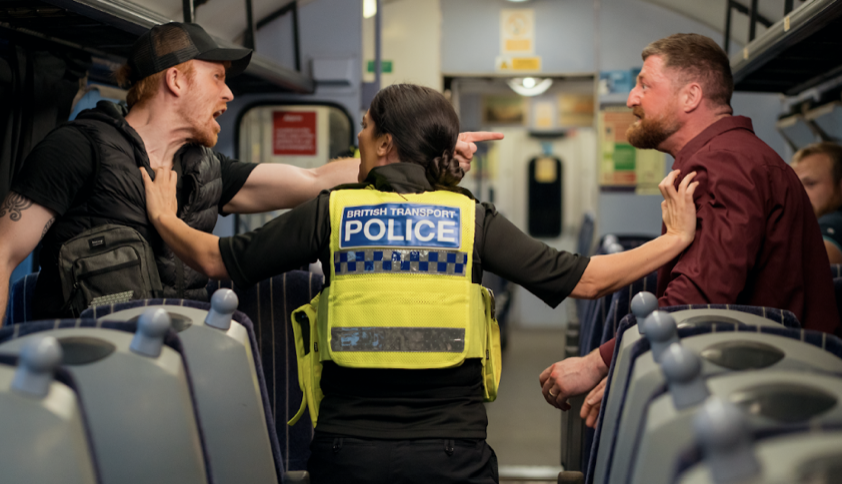
The ‘Non-Stop’ campaign follows a British Transport Police (BTP) officer through a shift where there is barely time to draw breath before the next call comes in.
It moves beyond the familiar image of a police presence on a railway platform to show what officers can actually face, including missing children, violent passengers, people in crisis, and the devastating aftermath of fatalities.
It is an unflinching reminder that, for officers, no two shifts are necessarily the same – and that the demands of the job can extend far beyond what the public sees.
The reality behind the uniform
While the campaign focuses on British Transport Police, its message will resonate with officers across policing.
Frontline officers regularly face violence, abuse, vulnerable people in crisis and incidents that can stay with them long after they have left the scene.
One moment can involve a routine patrol; the next can require an officer to deal with an extremely distressing or dangerous situation. Throughout it all, officers are expected to remain professional, compassionate and ready to respond. And then comes the next call.
The campaign captures that relentless nature of policing particularly powerfully. There is often little opportunity to pause, process what has happened or simply draw breath before another demand is placed on an officer.
When the shift ends, the impact may not
One of the most important messages behind ‘Non-Stop’ is that the impact of policing doesn’t necessarily end when an officer clocks off.
Repeated exposure to traumatic incidents, confrontation and violence can take a significant toll. Increasing workloads and staffing pressures can also make it more difficult for officers to properly recover between shifts. The result can be cumulative.
An incident that happened hours, days or even years ago can remain with an officer. Sometimes the impact is obvious; at other times, it can be harder to recognise.
That is why conversations around the health and wellbeing of those who put themselves in harm’s way to protect us all are so important.
Looking after your health isn’t about being unable to cope. It is about recognising that policing is demanding work and that everyone needs the right support around them to stay well.
A message that extends across policing
BTP Federation chair Stuart Cowan said the campaign was about recognising the extraordinary breadth of what officers are asked to deal with.
He highlighted concerns around rising demand, falling morale, burnout and officers leaving the force, with some leaving policing altogether.
The campaign calls on Government and the public to recognise the risks and responsibilities carried by BTP officers and the wider policing workforce.
But its message also applies to everyone in policing.
Whether working on the rail network, responding to calls in the community, protecting vulnerable people, investigating crime or supporting colleagues behind the scenes, policing can place significant demands on physical and emotional wellbeing.
The public may see the uniform, but they don’t always see what the person wearing it has experienced that day.
Non-stop doesn’t have to mean unsupported
Police officers will always be there for the public when they are needed. That is the nature of the job.
But being there for others shouldn’t mean neglecting your own health.
Having access to appropriate healthcare and wellbeing support can play an important role in helping people look after themselves throughout their policing careers – not simply when something has gone wrong.
For members of the National Police Healthcare Scheme (NPHS), the Scheme is there as part of that wider support network, providing access to healthcare designed with the policing community in mind.
It is a small but important reminder that while officers spend their working lives looking after other people, their own health deserves attention too.
The Non-Stop campaign brings that message to life. Behind every uniform is a person, and behind every shift can be experiences that don’t simply disappear when the shift ends.
Supporting the health and wellbeing of those who protect and serve is something that matters – because policing may be non-stop, but officers shouldn’t have to face its pressures without support.
Watch the British Transport Police Federation’s ‘Non-Stop’ campaign film below and find out more at www.btpfnonstop.co.uk.
READ MORE: ‘The NPHS was there for me when I needed it most’, says member.